Field-proven projects across landfill, mining, water & chemical sectors
Selected ELL surveys, permanent monitoring deployments, environmental assessments and site characterisations delivered for owners and EPCs.
 Leak Detection
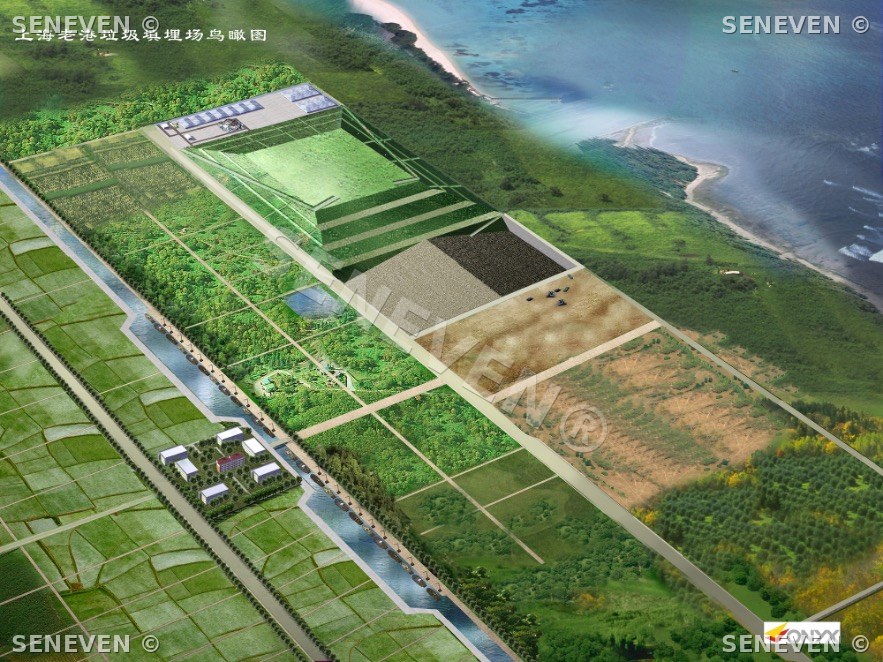
Shanghai Landfill Leak Detection
The Laogang integrated solid-waste base in Pudong covers 29.5 km² and is Shanghai's terminal disposal hub for municipal waste. SENEVEN carried out liner integrity surveys for Phases IV and V, about 1 million m² in total. During Phase IV the company took part in a blind-hole comparison organised by the client, with holes pre-set by the client and each surveyor working independently.
 Groundwater Survey
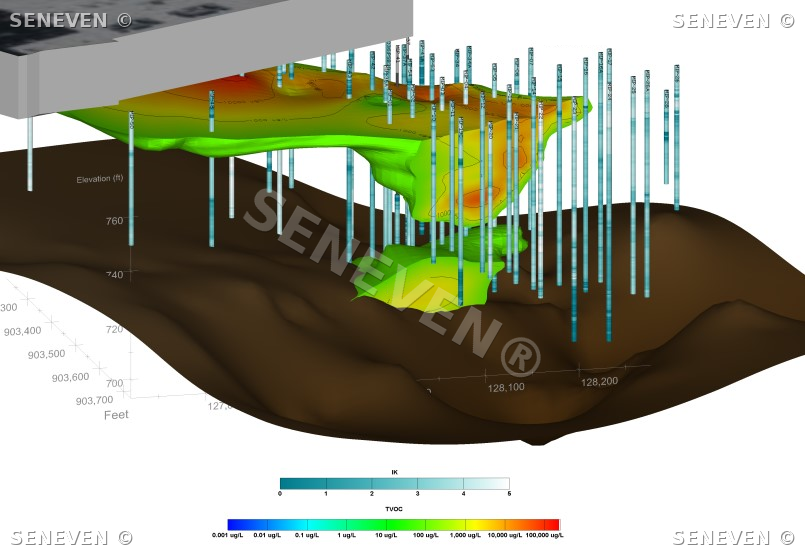
Groundwater Survey & Risk Assessment
A high-precision, long-duration monitoring campaign mapped the dynamic behaviour of a contaminant plume — supporting plume migration simulations and a containment strategy centred on source reduction and monitored natural attenuation. Project Overview A detailed groundwater contamination survey was carried out around a landfill site and its immediate surroundings, combining high-density borehole sampling, dynamic water-level monitoring, and multi-parameter water-quality analysis to precisely delineate the spatial extent and migration patterns of the contaminant plume. Methodology · High-resolution sampling — multi-level monitoring wells along site boundaries and downstream, with micro-pump depth-discrete sampling capturing groundwater across distinct aquifers. · Dynamic plume monitoring — a long-term water-level and water-quality network with high-frequency sampling captured seasonal and interannual plume variation. · Quantitative environmental risk assessment — standard health-risk models were applied to contaminant concentration data, quantifying human-health risks across exposure pathways. · Containment plan — based on contamination characteristics and quantitative risk results, a strategy emphasizing source reduction and monitored natural attenuation was proposed, with explicit monitoring indicators and frequencies defined.
 Long-term Monitoring
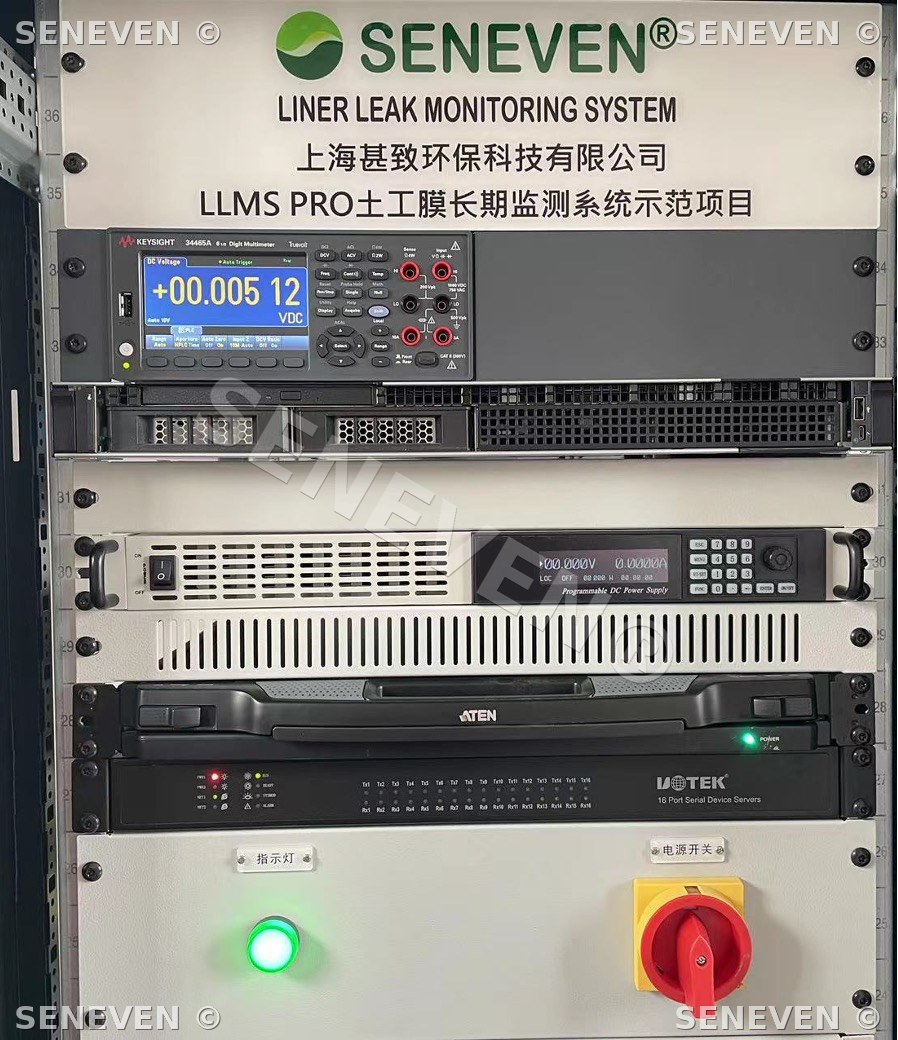
Long-term Monitoring Research Demonstration
SENEVEN maintains a dedicated test field in Pudong whose liner sequence matches real projects. Over holes at known coordinates, two algorithms back-calculate positions and are compared point by point against surveyed coordinates, calibrating both positioning capability and interpretation parameters: on a densified grid all three holes were detected, most within 0.3 m — centimetre class. Error rises with electrode spacing, which is what informs the spacing chosen at construction. Sensing electrodes are embedded once during construction and cannot be densified later — hence the test field.
 Heap Investigation
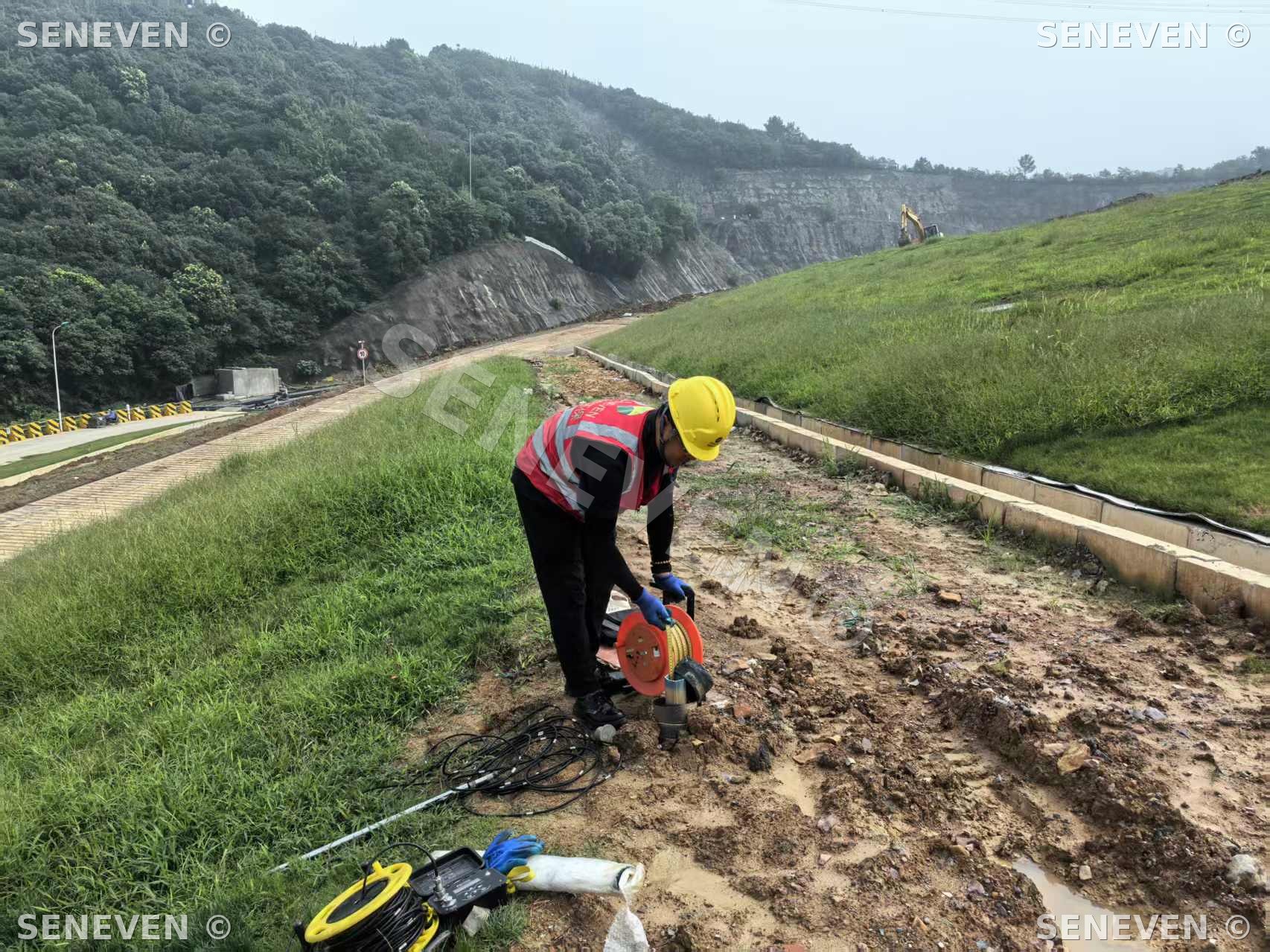
Waste Heap Assessment
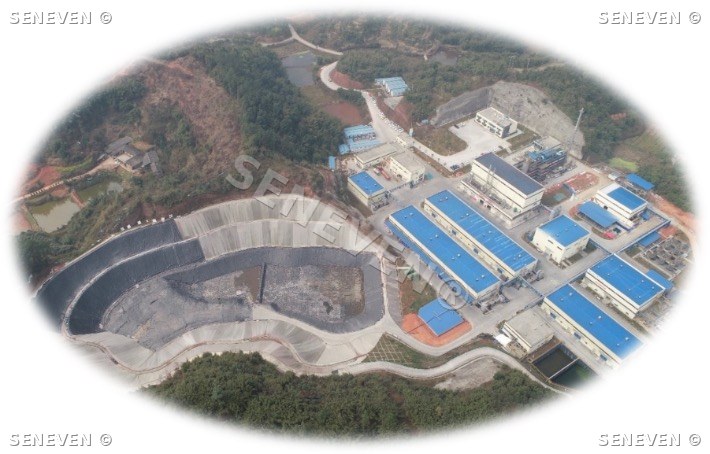
Project Overview After many years of operation, settlement of this landfill body had largely stabilized. To gain a comprehensive understanding of internal state, a systematic geological survey and assessment was carried out — covering leachate-level distribution, drainage-system performance, landfill-gas yield, and slope stability. Investigation Scope · Leachate level & drainage — multiple monitoring wells across the waste body track leachate levels with ultrasonic loggers; drainage piping was inspected for blocked or failed segments. · Stratigraphic profiling — exploratory boreholes plus geophysical surveys delineated waste stratigraphy, composition, and compaction across distinct zones. · Landfill-gas evaluation — pump-out tests and gas monitoring quantified generation rates and distribution, supporting decisions on gas utilization or controlled disposal. · Slope stability — geological survey combined with numerical simulation evaluated slope stability and produced risk-control recommendations. Outcomes The assessment report provided complete baseline data for closure-phase design and leachate-system retrofit, guided targeted repair of drainage facilities, and underpinned long-term operational safety of the landfill.
 Safety Assessment
Environmental Safety Assessment
Project Overview This East-China hazardous-waste landfill — total cell area ~80,000 m², built on a double-HDPE composite liner — has been operating for more than 15 years. As service life accumulates, integrity of the liner system and overall environmental safety drew increasing attention, requiring a systematic safety performance assessment. Assessment Scope SENEVEN deployed advanced electrical leak detection and environmental monitoring techniques to deliver a comprehensive safety assessment, covering: · Liner integrity — full-coverage Electrical Liner Membrane Detection (ELMD) of the basal liner system, precisely identifying any leak points. · Leachate water-quality analysis — multi-parameter testing of leachate samples to evaluate generation rates and compositional change. · Groundwater monitoring — comprehensive sampling across surrounding monitoring wells to assess any leakage influence on groundwater. · Landfill-gas distribution — systematic surveys to map gas-migration behaviour across the site. Conclusions The combined evidence formed a complete safety performance report, providing a scientific basis for safe operation, risk control, and any subsequent remediation decisions. Findings showed the liner system was largely intact, with localized minor anomalies — for which targeted repair and enhanced monitoring were recommended.
 Long-term Monitoring
Hubei Fly Ash Landfill Monitoring
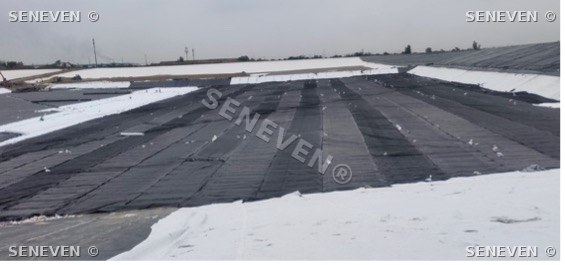
A high-risk fly-ash cell built with a standard double-layer HDPE liner. SENEVEN designed and installed a long-term leak monitoring system covering 57,000 m² with 1,565 multi-parameter electrodes. Before commissioning the client ran a blind trial: an artificial hole was made, the system acquired and the cloud platform raised an alarm; staking out the coordinates the platform returned, the client excavated a small area and found the pre-set hole exactly where predicted.
 Leak Detection
Inner Mongolia Heap Leach Detection
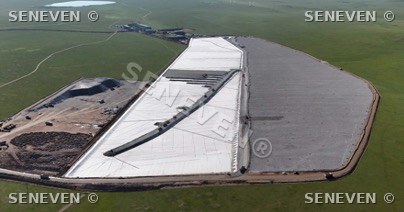
Project Overview The base-lining works for this project total 525,339.62 m², comprising: · Heap-leach pad: 494,127.95 m²; · Intermediate-solution pond: 7,298.18 m²; · Pregnant-solution pond: 7,727.01 m²; · Phase-I emergency pond: 16,186.48 m². This inspection covered the pregnant-, intermediate- and emergency-solution ponds — a total of 62,423.34 m². Liner Structure All ponds use a double-composite liner system. From bottom up: · compacted natural soil; · ≥300 mm permeable rock layer; · geocomposite drainage net; · 300 mm compacted gravel-soil; · GCL sodium-bentonite waterproof blanket; · 1.5 mm HDPE geomembrane; · geocomposite drainage net; · 2.0 mm HDPE geomembrane; · geocomposite drainage net; · 1.0 m gravel ballast layer. Methods · Lower HDPE — arc testing method inspection for surface defects; · Upper HDPE — after gravel placement, dipole method for overall integrity. Results · Construction quality was rigorously controlled; · Every defect identified was promptly repaired by the contractor; · Post-handover the facility has operated normally with no leakage or anomalies. Significance A representative case for double-liner inspection of non-ferrous heap-leach facilities: · Validated the combined arc + dipole workflow for large-area pond systems; · Effectively safeguarded operational safety of pregnant-, intermediate- and emergency-solution ponds; · Provided robust engineering support for environmental risk control in mining-waste reuse.
 Leak Detection
Hunan Vertical Barrier Detection
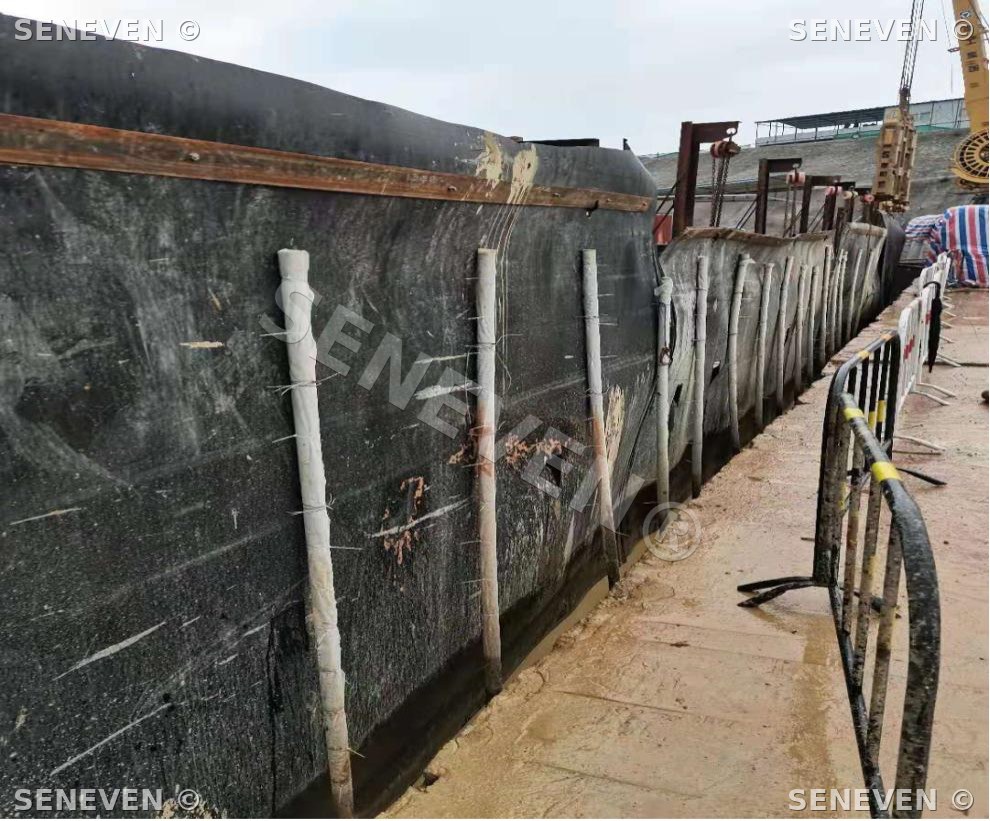
Project Overview Located on the western bank of the Xiang River, this ~17-hectare (255 mu) site is a representative heavy-metal contamination remediation project. To control chromate migration, an enclosed flexible vertical HDPE cut-off barrier was constructed around the contaminated zone: · Barrier length around the contaminated area: 1,581.2 m; · Around the detoxified chromium-slag pile: 667.0 m; · 3.0 mm HDPE membrane, with clay backfill on one side; · Top of barrier flush with grade; toe embedded ≥2.0 m into moderately weathered slate; · Average burial depth: 35–45 m. Inspection Scope & Methods End-to-end QA was performed to ensure construction quality and long-term operational safety: · Embedment depth — measured with a dedicated probe to verify design compliance; · Lap-seam continuity — dipole tests on lap joints after panel insertion; · Overall integrity — dipole survey of the full vertical barrier after backfill; · Pre-installation defect screening — arc testing method inspection of geomembrane surfaces for pinholes and scratches. Results · Inspection identified some membrane imperfections and embedment-depth shortfalls; · The contractor repaired and adjusted defects per the inspection findings; · Post-commissioning, periodic high-density resistivity surveys outside the barrier showed no signs of contaminant migration — confirming sound long-term performance. Significance A representative in-situ containment case for heavy-metal contaminated sites. End-to-end leak/defect inspection during construction plus operational monitoring: · Secured the construction quality of the cut-off system; · Significantly reduced groundwater contamination risk; · Provides a transferable technical pathway and lessons learned for similar non-ferrous metallurgical remediation projects.
 Leak Detection
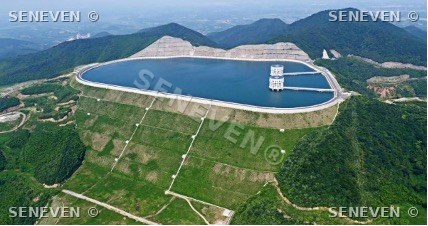
Pumped Storage Plant Upper Reservoir Leak Detection
Project Overview Upper reservoirs of pumped-storage plants rely on full-basin geomembrane liners and operate under high head and large drawdown cycles. Even minor liner defects threaten slope stability and directly degrade dispatchable capacity and round-trip efficiency. SENEVEN delivered full-coverage electrical leak detection on a major upper reservoir between liner placement and overburden installation, scanning over 120,000 m². Field Constraints A steep 1:1.75 bank slope, an extensive lined footprint and dense seam patterns combined with a critical-path construction window — defects had to be located and repaired without delaying subsequent works. Method During the exposed-liner phase, the entire basin was scanned with the arc testing method (ASTM D7953) to flag pinholes and seam defects at the millimetre scale; steep transitions were augmented with the dipole method. Every flag was handed to the contractor with georeferenced coordinates and on-site marking for immediate repair. Outcomes Full-coverage scan of 120,000+ m² with every flagged defect repaired on site; post-repair re-test confirmed liner integrity meets CQA acceptance criteria. The case provides an electrical evidence chain for long-term safe full-pool operation and dispatchable capacity, and establishes a replicable construction-phase QA template for similar pumped-storage upper reservoirs.
 Leak Detection
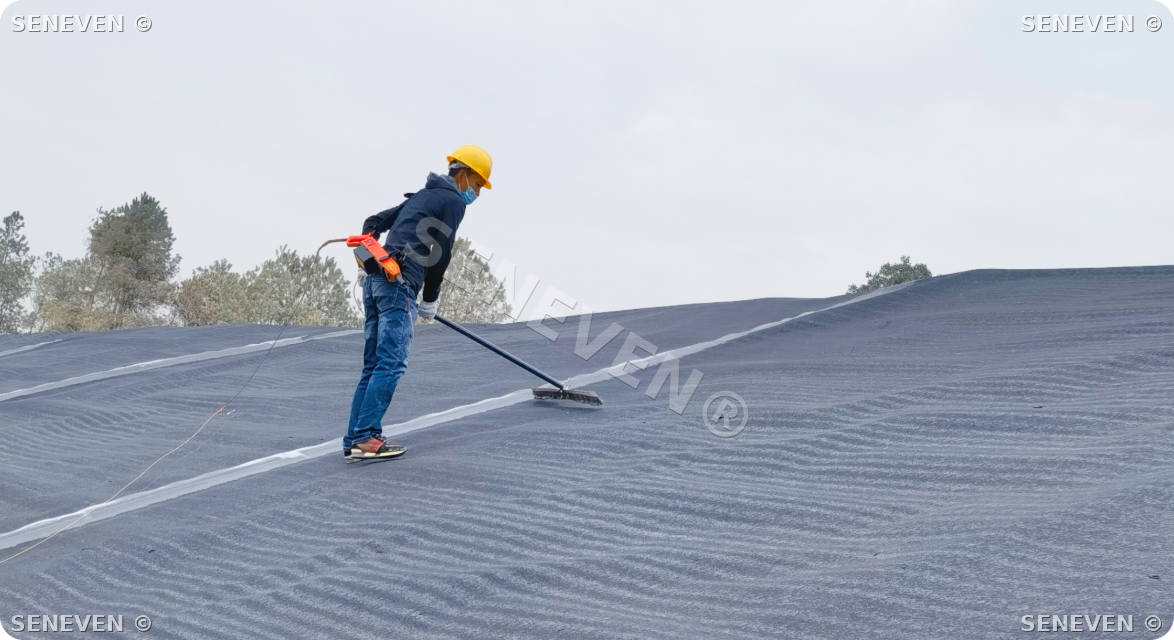
Xinjiang Large Reservoir Leak Detection
Total storage 55.82 million m³, maximum dam height 22 m. Arc testing tracked the welding stage throughout, followed by a full dipole survey after the protective layer was placed; every detected hole was repaired at an exact coordinate and verified by re-survey. The reservoir was filled in September 2023 and official observation records show an average daily drawdown of 3.5 mm, within design expectations.